Explore our top-tier precision CNC, metal injection molding (MIM), and automotive structural components designed for high efficiency and extended service life.
An authoritative engineering overview on plenum volume balancing, runner geometry, boundary layer friction reduction, and material selection for high-efficiency internal combustion engines.
The design of a custom intake manifold directly governs an engine’s volumetric efficiency (VE). By utilizing advanced 3D Computational Fluid Dynamics (CFD) modeling, our engineering team optimizes air velocity vectors, reduces turbulent recirculation, and eliminates cross-cylinder air starvation. Tuning plenum volume relative to total engine displacement (typically between 1.2× to 2.0× displacement ratio) ensures consistent pressure wave resonance, maximizing mid-range torque and high-RPM power output.
Through precise internal runner length calculation—factoring in wave reflection timing based on target RPM bands—our custom manifolds enable Helmholtz resonance charging. This passive supercharging effect forces higher density air mass into combustion chambers prior to intake valve closure.
| Material / Alloy | Manufacturing Process | Tensile Strength | Primary Application |
|---|---|---|---|
| A356-T6 Aluminum | Low Pressure Die Casting / Gravity Sand Cast | ≥ 290 MPa | Heavy Truck, Turbo Marine & Aftermarket High Power Engines |
| PA66-GF30 (Polyamide) | 3D Core Injection Molding & Vibration Welding | ≥ 175 MPa | Passenger Cars, Hybrid Vehicles & Lightweight Powertrains |
| 6061-T6 Billet Aluminum | 5-Axis High-Speed CNC Milling | ≥ 310 MPa | Custom Race Spec, Prototype Engine Engineering & Low-Volume OEM |
| AlSi10Mg Alloy | Selective Laser Melting (SLM 3D Metal Print) | ≥ 330 MPa | Aerospace Powertrains & Ultra-Complex Internal Geometry Prototypes |
Taizhou OLO Auto Parts Co., Ltd. was established in 2003. It is located in Taizhou, China. Taizhou is the industry weathervane in the auto parts industry at home and abroad, which has great influence. Our company mainly deals in Korean (Hyundai, Kia) automotive accessories, combining traditional and professional network wholesale and retail.
With the company's "integrity, win-win, professional, sharing" business philosophy, after more than ten years of development, the company has a certain size and strength. Now we have a professional team and good reputation in the industry, and we established a perfect sales network throughout the country and the world with a large number of long-term cooperation of high-quality partners.
With the market and customer needs, the company has established its own brand—OLO, which has received supports and praises from a large number of customers at home and abroad. We also have many agents and distributors. To continuously strengthen cooperation with customers and share business relationships, the company constantly strives to innovate and keep up with the times, continuing to focus on the auto parts market. In order to be a "good auto parts person", we are willing to bring more high-quality products and services for more customers, work together to create a bright future. Your satisfaction is always our aim.
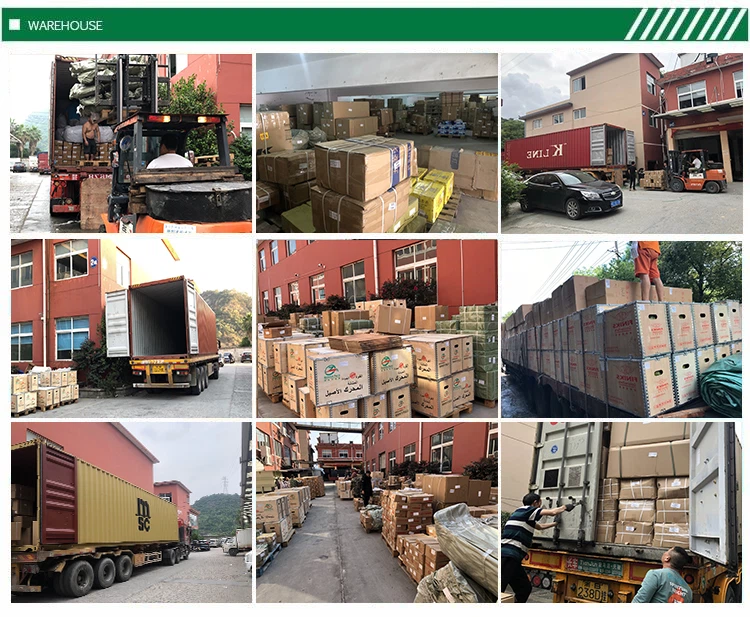
Leveraging Taizhou’s mature automotive manufacturing supply chain to achieve unparalleled tooling agility, rapid prototyping, scale efficiency, and rigorous quality control.
Taizhou houses over 6,000 specialized automotive component suppliers, precision casting foundries, mold makers, and heat treatment facilities. This localized industrial concentration guarantees raw material availability within hours, reducing total manufacturing lead times by up to 40%.
Utilizing direct 3D printing of sand cores and multi-axis CNC machining, we can progress from initial CAD design validation to functional aluminum prototype casting within 14 business days, significantly accelerating client NPI (New Product Introduction) cycles.
Equipped with Zeiss CMMs, X-ray non-destructive flaw detectors, hydrostatic leak test rigs, and hot/cold thermal cycle test chambers, Chinese manufacturing ensures 100% adherence to global OEM specifications including IATF 16949 and ISO 9001.
As regulatory pressures drive lower carbon emissions and higher fuel economy, intake manifold engineering is rapidly evolving toward integrated mechatronics and lightweight composite structures.
Modern engines increasingly rely on electronically controlled internal valves or rotary flaps to dynamically alter intake runner length. Long runners enhance low-speed torque, while switching to short runners maximizes high-RPM airflow, providing an optimized torque curve across the entire powerband.
To reduce turbo lag and intake air piping volume, next-generation forced-induction engines integrate liquid-to-air charge air cooler (intercooler) cores directly inside the intake manifold plenum. This dramatically improves transient throttle response and intake charge density.
With the growth of hydrogen ICE and CNG/LNG commercial powertrains, custom intake manifolds require specialized surface anti-corrosion coatings, integrated direct injection rail mounts, and zero-leakage seals capable of withstanding unique chemical combustion characteristics.
From high-revving motorsport engines to continuous-duty industrial diesel generators, our custom intake manifolds are engineered for specialized operational environments.
High-flow billet aluminum intake manifolds designed for tuned turbo and supercharged engines. Built to handle boost pressures in excess of 4.5 bar (65 PSI) without structural flex or flange distortion. Features integrated nitrous or methanol injection ports.
Ruggedized heavy-duty cast aluminum manifolds engineered for high-dust, high-vibration off-highway equipment. Designed with internal swirl chambers to maximize low-end engine torque and optimize particulate filtration pathways.
OEM-replacement and upgraded manifolds for commercial trucks (including Hyundai, Kia, Heavy Duty Trucks, and semi-trailers). Focused on thermal fatigue resistance, extended EGR (Exhaust Gas Recirculation) compatibility, and long-term fuel efficiency.
Procuring custom engine intake components internationally requires strict validation of manufacturing repeatability, metallurgical integrity, and supply chain continuity. At Taizhou OLO Auto Parts, we streamline B2B procurement through a structured 5-stage quality gateway:
Virtual stress analysis and thermal expansion modeling prior to steel mold cutting.
Submission of full Production Part Approval Process documentation including dimensional layouts, control plans, and material certifications.
Every manifold plenum assembly undergoes pressurized leak verification to ensure complete seal integrity under vacuum and boost conditions.
Sincerely look forward to your cooperation


Detailed technical answers to common queries regarding design customization, material selection, flow testing, and OEM manufacturing workflows.
For initial engineering design and CFD validation, the computer modeling stage takes 3 to 5 working days. Rapid prototyping via 5-axis CNC machining or 3D-printed sand casting typically takes 10 to 14 days. Once prototypes are validated, full steel production tooling requires 30 to 45 days, after which mass production yields 5,000 to 20,000 units per month depending on complex assembly requirements.
Cast aluminum manifolds (such as A356-T6) offer superior thermal stability, extreme structural rigidity under high turbo boost pressures (>3 bar), and ease of custom welding/modification. Polymer manifolds (PA66 with 30% glass fiber reinforcement) reduce overall weight by approximately 40-50%, offer smoother internal wall textures straight out of the mold, and reduce heat transfer from the cylinder head, making them ideal for high-volume, lightweight passenger vehicles.
Yes. Utilizing non-contact 3D blue-light laser scanners, our engineering team can capture complex physical geometries with an accuracy of up to ±0.01 mm. We then generate editable CAD models, perform internal flow channel optimizations, and reconstruct high-performance custom manifolds tailored to your specific displacement or throttle body upgrades.
Every custom intake manifold undergoes 100% pressure decay leak testing, CMM mounting flange flatness verification (within 0.05 mm), surface roughness testing (Ra 1.6 to 3.2), and digital flow bench CFM testing to guarantee uniform cylinder distribution before packaging.
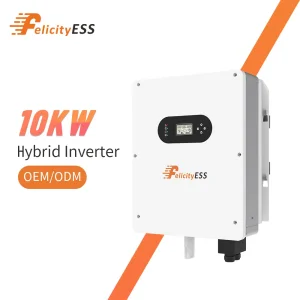
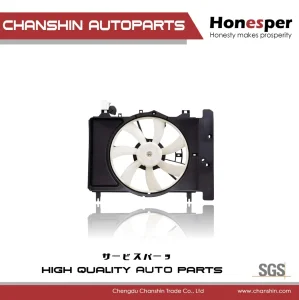
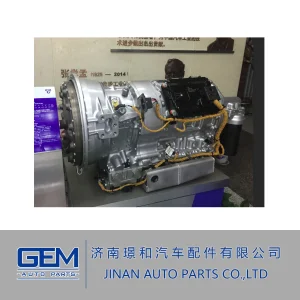
Discover our complete OEM product lineup ranging from hybrid power inverters and cooling shrouds to heavy-duty gearbox and transmission assemblies.
 OLO Auto Parts