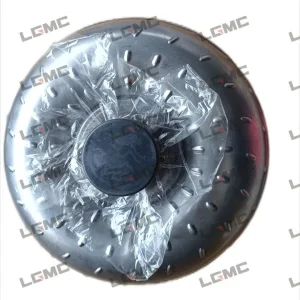
Explore our leading components designed to elevate efficiency, ensure absolute safety, and optimize thermodynamic management across green vehicle architectures.
Years of Engineering Excellence
Global Strategic Partners
IATF 16949 Aligned Standards
Smart China Factory Automation
The global transport sector is undergoing its most profound transformation in over a century. As governments enforce strict greenhouse gas regulations and automotive OEMs pivot toward zero-emission targets, the demand for specialized components has surged. However, the path to full electrification is not uniform. The modern automotive landscape is defined by a multi-pathway strategy, utilizing Hybrid Electric Vehicles (HEVs), Plug-in Hybrid Electric Vehicles (PHEVs), and battery-only powertrains (BEVs) to bridge the transition.
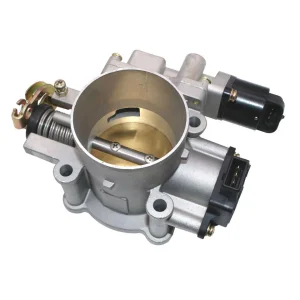
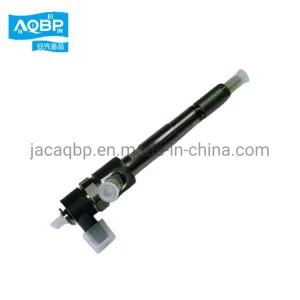
Manufacturing parts for this hybrid landscape requires extraordinary adaptability. Custom hybrid architectures integrate both internal combustion engines (ICE) and high-voltage electrical drivetrains within a highly confined footprint. For instance, throttle bodies (such as the Mechanical Throttle Body for Nissan Z24) and precision diesel fuel injectors (like those for Saic Maxus V80 T60 G10) must interact seamlessly with regenerative brake systems and smart energy storage matrices to maximize overall thermal efficiency and drive cycles.
As operating currents and battery pack densities scale upward, the integrity of structural electronics enclosures becomes paramount. Electromagnetic interference (EMI) shielding, thermal dissipation, and structural light-weighting represent three critical pillars in our engineering design philosophy.
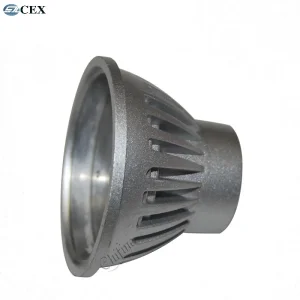
Through our state-of-the-art aluminum die-casting operations utilizing structural grades such as A356, A380, and AlSi10Mg, we construct heavy-duty ignition coil housings and inverter enclosures. High silicon-aluminum alloys provide the mechanical strength needed to resist fatigue under thermal cycles while facilitating rapid heat dissipation away from core power components. Our engineering roadmap targets thin-wall casting technologies and multi-material integration, allowing Tier 1 buyers to shave critical ounces off overall vehicle weight without sacrificing crash-test integrity.
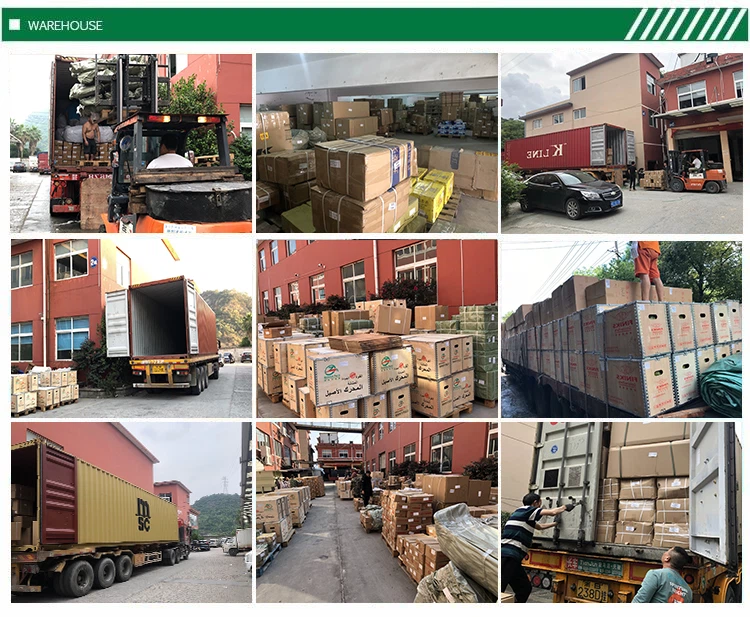
Our advanced manufacturing and research facilities operating in the industrial heart of Taizhou, China.
Delivering high-precision parts designed for extreme tolerances and tough operating conditions across varied domains.
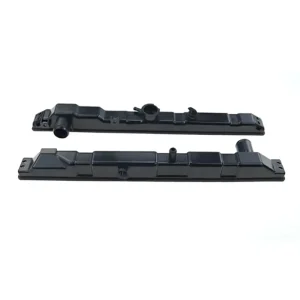
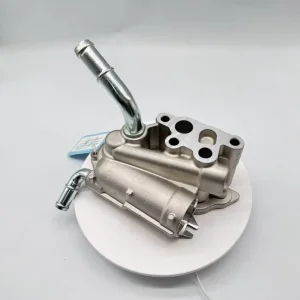
Our engineered thermostat housings and custom plastic radiator tanks for passenger cars and light trucks are designed to handle variable thermal loads, ensuring hybrid drivetrains maintain optimal temperature zones for both electrical modules and combustion blocks.
We supply custom-stamped connection pieces and electrical system components for high-voltage distributions, utilizing progressive stamping dies that deliver tight tolerances within ±0.02mm for seamless system assembly.
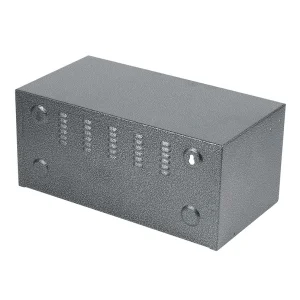
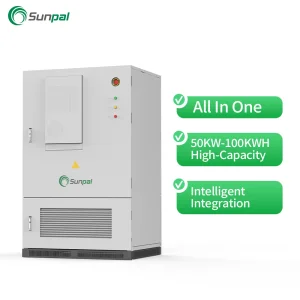
Expanding from mobile automotive structures, our Sunpal BESS cabinets ranging from 60kW to 100kW incorporate high-density outdoor LiFePO4 cells to support decentralized electric vehicle charging networks and load peak-shaving.
Operating out of Taizhou, China's premiere manufacturing ecosystem, Taizhou OLO Auto Parts Co., Ltd. has established a supply hub that combines regional cluster efficiencies with top-tier automation. Known globally as a major automotive manufacturing corridor, Taizhou provides unparalleled access to raw materials, downstream processing, and specialized metallurgical testing labs.
Our Factory 4.0 initiatives combine robotized spot welding for safety-critical components (such as our high-precision exhaust brackets) with real-time tooling analysis. This ensures structural components perform reliably over their service life. Global procurement directors demand consistency; our digital tracking system ensures every batch of aluminum, copper, and specialized polymers (used in our radiator water tanks) is traceable back to its melt-batch or chemical lot certificate. This transparency is fundamental to meeting the trust requirements of our worldwide distribution network.
Modern electrification extends beyond passenger vehicles to encompass public transport networks, off-highway machinery, and maritime engineering. OLO’s engineering capacity has evolved to match this diversified footprint:
Establishing authority in the automotive segment requires more than manufacturing capability; it demands a deep commitment to global regulatory alignment and logistical agility. For over two decades, OLO has developed a comprehensive logistics network that supports major shipping corridors across Europe, the Americas, and Southeast Asia. We recognize that late deliveries halt assembly lines, costing tens of thousands of dollars per hour. Our localized warehouse partnerships and JIT (Just-In-Time) shipping workflows ensure consistent component supplies to global assembly sites.
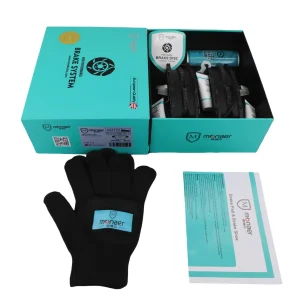
Furthermore, our engineering teams assist clients in navigating complex regional compliance criteria. Whether meeting CE and RoHS directives for power electronics in Europe or complying with FMVSS/DOT rules for braking systems and structural components in North America, we provide fully documented verification. Our brake systems, including the high-performance ceramic Monaer Brake Pads, undergo extensive friction and wear testing to verify compliance with strict stopping distances and thermal recovery standards.
Answers to engineering and procurement queries regarding custom parts manufacturing.
Our progressive stamping lines regularly hold tolerances within ±0.02 mm for electrical connection pieces and elevator brackets. Using computerized optic check stations, we monitor tooling wear in real-time to prevent drift during high-volume production runs.
For structural power housings, we utilize specialized alloys like A356 or AlSi10Mg. These materials offer an ideal balance of thermal conductivity, corrosion resistance, and high yield strength. These properties are critical for component reliability during vehicle vibration and thermal cycling.
Yes, our Sunpal 60kW to 100kW BESS cabinets feature IP55/IP65 ratings, double-wall cooling pathways, and C4/C5 anti-corrosion coatings. These protection measures make them suitable for installation in coastal environments and locations with high ambient humidity.
We align all our production stages with IATF 16949 requirements, from initial die-casting and stamping to heat treatment and final assembly. Our inspection reports include material mill sheets, PPAP submissions, and coordinate measuring machine (CMM) dimensional reports.
Explore our specialized heavy industrial parts, sensors, and structural enclosures built to withstand tough field conditions.
We sincerely look forward to collaborating with you to develop next-generation automotive components.



 OLO Auto Parts