Choosing an auto parts supplier in China can open access to broad manufacturing capabilities and competitive options. It also takes careful verification. A professional website or fast quotation does not prove production quality. Buyers should compare a supplier’s actual product range, factory capabilities, quality controls, and export experience before making a commitment.
How to find reliable auto part suppliers starts with a clear specification. Define the part number, materials, dimensions, performance requirements, packaging, and expected order volume. Then request current product documentation, sample parts, and information about inspection procedures. A close look at a sample can reveal details a catalogue misses, such as connector fit, surface finish, or inconsistent labeling. Ask who manufactures the parts and whether production is handled in-house or through subcontractors. Be specific. Vague answers deserve follow-up.
A sound evaluation also considers communication and repeatability. Confirm how defects are recorded, how replacement requests are handled, and whether the supplier can maintain consistent specifications across orders. Independent inspections may help when order value or technical risk is significant. Check references where practical, and keep written records of agreed requirements. These steps cannot remove every sourcing risk. No checklist is perfect. I would treat an unusually low quote as a reason to ask more questions, not as proof of a problem. Likewise, a factory visit can be useful, but one visit cannot guarantee future performance. Careful checks, clear expectations, and ongoing review provide a more dependable basis for choosing an auto parts supplier in China.
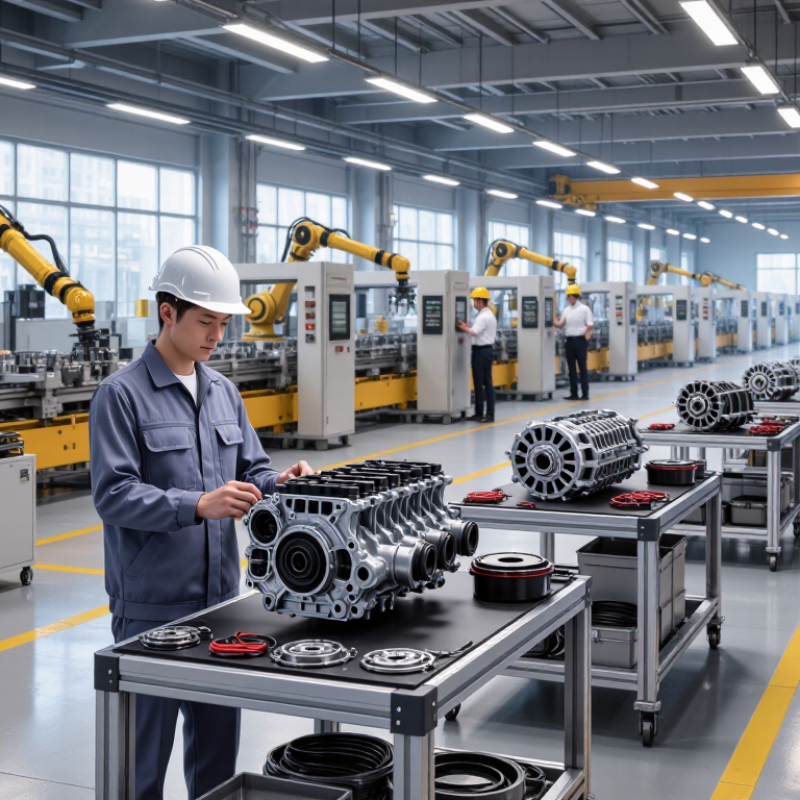
Before contacting suppliers, turn the part into a measurable specification. Include the part number, vehicle fitment, material grade, critical dimensions, tolerances, finish, expected annual volume, and packaging needs. Attach a drawing or clear photos with scale references. Specify inspection points and sample-approval steps; “match this sample” is too vague when a few millimeters can affect fit. Small details matter. The China Association of Automobile Manufacturers reported 30.16 million vehicles produced in China in 2023, a scale that makes precise specifications essential when comparing supplier offers.
Set supplier criteria before comparing quotations. Ask for documented quality procedures, lot traceability, inspection records, production capacity, sample lead time, minimum order quantity, and written defect-handling terms. For safety-critical or high-wear parts, define material and performance tests and request evidence from relevant production batches. Compare total landed cost, not just unit price: tooling, packaging, freight, and rework can change the calculation. A low quote is not proof of value. Consider an on-site or third-party process audit when volume or risk justifies it, then approve a production sample before placing a larger order. One imperfect assumption to revisit: a polished certificate does not show how consistently a factory controls daily production.
China’s auto-parts sourcing landscape includes manufacturing clusters, wholesale markets, trade fairs, and online directories. Guangzhou and nearby cities offer access to broad replacement-part networks, while Ningbo and other coastal centers have many component makers. The best channel depends on the part, required volume, and how much technical support you need. A market visit can reveal packaging, finish, and stock depth, but a busy stall does not prove factory capacity.
Trade fairs make it easier to compare suppliers face to face and discuss drawings or sample requirements. Online directories are useful for building a shortlist, not for confirming a supplier’s capabilities. Ask for a business registration record, production details, and references for similar parts. Paperwork matters. Check sample dimensions and materials against your specifications, and document any approved changes before ordering.
For complex components, arrange a factory visit or use an independent inspection service to review equipment and production controls. A local sourcing partner can help with translation and follow-up, but define their role and fees in writing. I would not treat a polished sample as a guarantee; later batches can differ. Agree on inspection criteria before production, even if the process feels a little slow.
When assessing auto parts suppliers in China, verify the legal business name, factory address, ownership, and scope of each quality certificate. Check the certificate number with its issuing body; a polished PDF is not enough. The ISO Survey 2022 recorded more than 1.2 million valid ISO 9001 certificates worldwide, including over 430,000 in China. That scale makes verification essential. ISO 9001 shows a quality-management system exists, but it does not certify every part. For automotive production, confirm whether IATF 16949 applies to the supplier’s site and product scope.
Inspect quality evidence tied to the exact part number: material certificates, dimensional reports, batch traceability, and test results from qualified laboratories. Ask for samples and compare measurements against your drawing, especially at tight-tolerance points such as bearing seats or connector pins. Review defect records and corrective actions, not just a supplier’s best sample. Small detail. A clean sample can still hide uneven production. A common blind spot is assuming that one successful inspection predicts future batches; it does not.
Check compliance requirements for the destination market before ordering. Request the applicable declarations, test reports, and material documentation, then confirm that they match the product version and intended use. Keep dated copies and recheck them after design or factory changes. Certificates help, but they can expire, cover another site, or omit a process. Be cautious with gaps, and record what remains unverified rather than treating every missing document as proof of misconduct.
How to Find the Best Auto Parts Suppliers in China?
Compare Pricing, Communication, Logistics, and Support
Compare like-for-like quotes, not just unit prices. Ask each supplier to itemize minimum order quantities, packaging, inspection, freight terms, and warranty coverage. A low quote can still mislead. Request a sample quotation tied to the same part specification, then check whether answers remain clear when you ask about tolerances or delivery changes. Fast replies help, but they do not prove technical understanding.
Logistics and after-sales support matter just as much. The World Bank’s 2023 Logistics Performance Index ranked China 19th among 139 economies. The report also estimated an average 44 days for containerized goods to move between exporter and importer ports. These are broad benchmarks, not promises for an individual shipment. Ask suppliers for recent dispatch records, packaging photos, tracking milestones, and a named contact for claims. Even careful checks may miss a delay.
Tips: Send the same checklist to every candidate. Compare written lead times, response quality, replacement procedures, and shipping updates. Ask how they handle a mismatched part number. Keep the answers in one table. It takes time, and the scoring can feel subjective, so record why each supplier earns trust.
| Supplier Type | Typical Pricing | Communication | Logistics | After-Sales Support | Best Suited For | What to Verify |
|---|---|---|---|---|---|---|
| Parts Manufacturer | Often more competitive for repeat orders and larger quantities. Tooling, customization, and minimum-order requirements may add cost. | Technical questions can be handled directly, though response speed and English-language capability vary by team. | Can arrange export packing and shipment; buyers may need to coordinate freight, customs documentation, or inspection separately. | May provide product specifications and defect-handling procedures. Warranty terms should be agreed in writing before ordering. | Importers seeking consistent specifications, private-label production, or recurring volume. | Factory address, product-specific quality controls, samples, production capacity, inspection access, and written quality and warranty terms. |
| Specialized Exporter | Prices may include sourcing, export handling, or order consolidation, so compare the total landed cost rather than unit price alone. | Often experienced with export enquiries and documentation. Confirm who answers technical questions and how quickly updates are provided. | May coordinate shipments from multiple factories and help prepare commercial documents. Consolidation can simplify smaller mixed orders. | Can act as the contact point for claims, but resolution may depend on the underlying manufacturer and the agreed contract. | Buyers ordering several product categories or needing export coordination. | Which party issues the invoice, product origin, traceability, inspection arrangements, shipping responsibilities, and claims process. |
| Trading Company | May have higher unit prices than direct factory sourcing, but can offer lower order complexity and access to multiple product sources. | A sales contact may manage the order centrally. Ask for clear technical answers and prompt written confirmation of changes. | May combine products from different suppliers; confirm whether items ship together and how split shipments affect cost and timing. | Support quality varies. Establish who handles replacements, refunds, and communication with the actual producer. | Small or mixed orders, early-stage sourcing, and buyers who value a single point of contact. | Business registration, supplier authorization or sourcing role, product samples, inspection evidence, and responsibility for defects. |
| Regional Parts Wholesaler | Can be convenient for available stock and modest quantities; pricing and selection depend on inventory and sourcing arrangements. | May be responsive for in-stock items. Confirm whether product details, fitment information, and stock status are checked before payment. | Stocked goods may be dispatched sooner than made-to-order products, but export experience and international shipping options differ. | Returns and warranty coverage can be limited by stock origin and the wholesaler’s own terms. | Buyers needing readily available parts or testing demand with smaller purchases. | Actual stock, manufacturing origin, fitment details, packaging, export capability, and written return and warranty conditions. |
Comparison note: These are general supplier-category characteristics, not guarantees. Prices, minimum order quantities, production schedules, shipping costs, and support terms vary by part, order size, destination, and contract. Request a written quotation that specifies product details, Incoterms, lead time, payment terms, inspection criteria, and warranty conditions.
Before placing a large order, request samples from each shortlisted auto parts supplier. Check whether the parts match your drawings, dimensions, material, and finish. Use calipers to measure key points, and inspect edges, mounting holes, and surface marks under good light. Small differences matter. If possible, fit each sample to the intended assembly and record any adjustment needed.
Test more than appearance. Run practical checks suited to the part, such as repeated installation, vibration exposure, or load testing. Ask the supplier how samples were made and whether production parts will use the same materials and process. Compare sample results with written specifications. A polished sample is not proof of consistent production. I once focused too much on finish and missed a connector tolerance; it caused avoidable rework.
Tips: Share a simple inspection sheet with measurements, photos, and pass/fail criteria. Keep dated sample records. Track response time, technical answers, sample lead time, and how clearly the supplier handles a defect. Ask for a corrective-action explanation when something fails. One late reply may be an exception, but repeated delays or vague answers deserve attention before you commit to volume.
List the part number, vehicle fitment, material, dimensions, tolerances, finish, order volume, and packaging needs. Add a scaled photo or drawing. Small details matter.
Compare tooling, packaging, freight, inspection, and possible rework alongside the unit price. A low quote alone does not prove value.
Request quality procedures, traceability records, inspection results, production capacity, sample lead time, and written defect-handling terms. Check references for similar parts.
Measure its critical dimensions and verify its material against your specification. Agree on inspection points and sample approval before placing a larger order.
Manufacturing clusters, wholesale markets, trade fairs, and online directories can help build a shortlist. Each offers different levels of access and technical support.
No. A stall may show packaging, finish, and available stock, but it does not prove factory capacity. Not proof of capacity.
Consider one when order volume or product risk justifies it. For complex parts, review equipment and production controls, or use an independent inspection service.
I may still trust a polished sample too much; later batches can differ. Check batch records and agree on inspection criteria before production.
Finding the right auto parts supplier in China starts with clearly defining your needs. Identify the parts, materials, specifications, expected volumes, quality standards, and delivery requirements before beginning your search. Then explore suitable supplier markets and sourcing channels, and create a shortlist based on how well each candidate matches your criteria. A focused search makes it easier to compare options and ask suppliers precise questions.
How to find reliable auto part suppliers also depends on careful verification and practical evaluation. Review each supplier’s credentials, quality-control processes, product documentation, and ability to meet relevant requirements. Compare pricing alongside communication, shipping arrangements, lead times, and after-sales support rather than choosing on cost alone. Before placing a larger order, request samples and assess their quality and consistency. A small trial order can also reveal how effectively a supplier handles production, communication, and delivery, helping you make a more informed long-term decision.

OLO Auto Parts