2026 Top Auto Parts What Makes Them More Durable?

Time:2026-10-17 Author:Ethan
0%

In 2026, durable auto parts are defined by more than attractive packaging or a low price. They must survive heat, vibration, moisture, road salt, and repeated daily stress. What makes some auto parts more durable is a combination of material quality, precise manufacturing, tested design, and correct installation. A brake rotor may look flawless online, yet its real strength appears after thousands of hard stops. A control arm must resist pothole impacts without developing cracks around its joints.

Our experience with vehicle maintenance shows that small construction details often matter most. High-grade steel, reinforced polymers, sealed bearings, and corrosion-resistant coatings can extend service life. However, no component lasts forever. Even the best parts can fail when a vehicle carries excessive loads or receives poor maintenance. That point is easy to overlook.

This guide examines the leading auto parts expected to stand out in 2026. It considers evidence from manufacturer specifications, independent testing, repair experience, and long-term user reports. We will compare materials, warranties, heat resistance, fitment accuracy, and resistance to wear. A trusted part should perform consistently, not merely promise impressive numbers. Installation also deserves attention. Incorrect torque, contaminated fluids, or worn neighboring components can shorten a new part’s life.

Some claims remain uncertain. Marketing language is not engineering proof. Careful buyers should check certifications, recall information, warranty terms, and vehicle compatibility. The strongest choice balances durability, safety, price, and realistic driving conditions. That balance matters on every road.
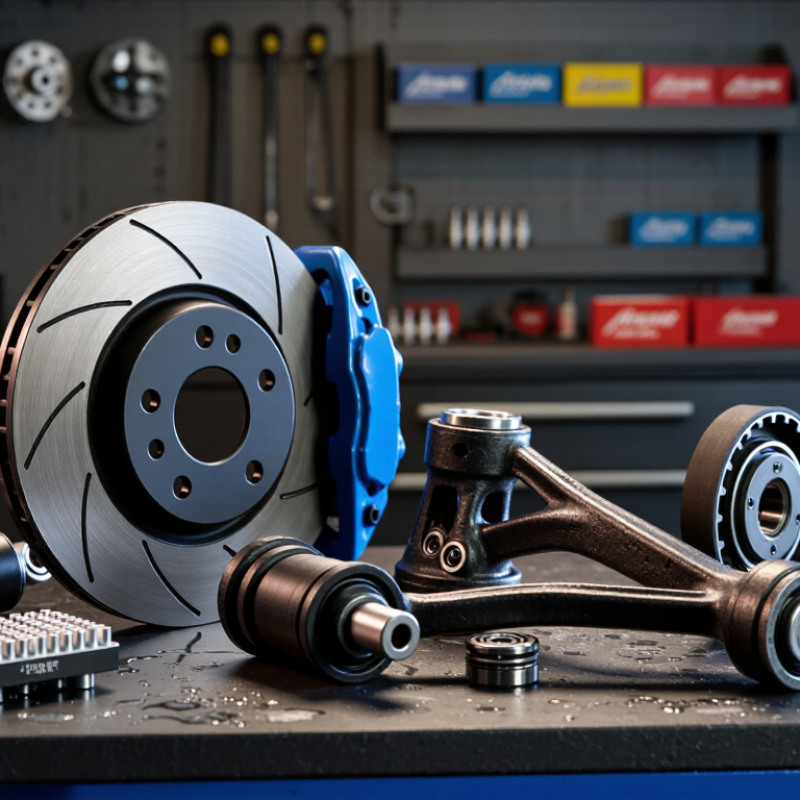
2026 Top Auto Parts What Makes Them More Durable?

Define Durability: ISO 16750 Tests for 2026 Automotive Parts

2026 Top Auto Parts: What Makes Them More Durable?

Define Durability: ISO 16750 Tests for 2026 Automotive Parts

Durability means surviving real conditions, not merely lasting on a test bench. ISO 16750 evaluates automotive electrical and electronic parts under electrical, mechanical, climatic, and chemical stresses. Tests can include vibration, thermal cycling, humidity, dust, water exposure, and voltage variation. The correct severity depends on the component’s location and mounting position. A part near the engine faces different risks than one inside the cabin.

The market needs this discipline. S&P Global Mobility’s 2024 vehicle-in-operation analysis reported an average U.S. light-vehicle age of about 12.6 years. Older vehicles demand replacement parts that tolerate repeated heat, vibration, corrosion, and imperfect installation. The World Bank’s Commodity Markets Outlook also recorded continuing price volatility for industrial metals in 2024. Material selection now matters twice: performance and supply stability. Still, ISO testing does not guarantee unlimited service life. Real roads are messier.

Tips: Ask for the applicable ISO 16750 test section, severity level, and test report. Check temperature ranges, vibration profiles, connector sealing, and corrosion results. Do not trust “heavy-duty” wording alone. A useful review should connect laboratory evidence with field experience, though field data is often incomplete. That gap deserves more attention. Small design details matter: strain relief, protected terminals, accurate tolerances, and stable solder joints can prevent early failure. Testing should reflect installation mistakes too, because perfect assembly is an assumption.

Compare Materials: 6000-Series Aluminum vs. 420 Stainless Steel

For 2026 auto parts, durability starts with the material, not appearance. 6000-series aluminum weighs about 2.70 g/cm³, while 420 stainless steel is near 7.7 g/cm³, according to ASM Handbook data. An aluminum bracket can therefore reduce mass by roughly 65%. That difference matters for suspension supports, covers, and other moving components.

6000-series aluminum also offers useful strength after heat treatment. The Aluminum Association reports typical 6061-T6 yield strength near 276 MPa. However, scratches, poor welding, or excessive heat can weaken the finished part. It is durable, but not careless-proof. 420 stainless steel contains approximately 12–14% chromium and can achieve much higher hardness after hardening, according to stainless steel technical guidance from the International Stainless Steel Forum. It suits wear-prone parts, shafts, and components exposed to repeated friction.

The choice is not simple. 420 stainless steel resists wear better, yet its corrosion resistance is generally below that of common austenitic stainless grades. 6000-series aluminum forms a protective oxide layer, but road salt and trapped moisture may cause localized corrosion around fasteners. Real-world service reports from automotive materials testing repeatedly show that joint design, surface treatment, temperature, and maintenance influence failure more than material names alone. That deserves attention. A lighter part may improve efficiency, while a hardened steel part may survive longer under abrasion. The correct comparison must include load cycles, heat exposure, and the actual road environment.

2026 Top Auto Parts: What Makes Them More Durable?

6000-Series Aluminum vs. 420 Stainless Steel

The chart compares representative engineering properties using 6061-T6 as a common 6000-series aluminum reference and heat-treated 420 stainless steel. Values are normalized within each property, while the tooltip shows representative real-world values. 420 stainless steel generally provides higher strength, stiffness, and hardness, while 6000-series aluminum offers much lower weight and easier weight-efficient component design. Actual durability depends on heat treatment, surface condition, load, temperature, and corrosion exposure.

Measure Corrosion Resistance with SAE J2334 Cyclic Testing

2026 Top Auto Parts: What Makes Them More Durable?

Measure Corrosion Resistance with SAE J2334 Cyclic Testing

Durable auto parts resist more than visible rust. They must survive salt, humidity, heat, road grit, and repeated drying. The NACE IMPACT study estimated global corrosion costs at 2.5 trillion US dollars annually, equal to about 3.4% of global economic output. That figure explains why corrosion testing deserves attention before production approval.

SAE J2334 cyclic testing recreates harsh road exposure in controlled stages. A typical cycle combines salt application, high humidity, and a heated drying period over roughly 24 hours. Technicians inspect coating blisters, red rust, edge creep, and fastener corrosion after repeated cycles. A panel may look clean after ten cycles, then show rust spreading from a scratched edge. Small damage matters.

Test the weak points.

Experienced engineers also compare results with field inspections, material thickness, and drainage design. SAE J2334 does not predict an exact service life. It ranks corrosion performance under a repeatable method. That limitation should be stated clearly. A part passing the test can still fail when mud remains trapped behind a bracket. The best evaluation combines cyclic testing, realistic assembly conditions, and documented inspection photographs. NACE data supports the economic urgency, while SAE J2334 provides practical evidence for better material and coating decisions.

2026 Top Auto Parts: What Makes Them More Durable? — Measure Corrosion Resistance with SAE J2334 Cyclic Testing

A practical, brand-neutral reference matrix for evaluating corrosion protection, appearance, and functional durability in automotive components

Automotive Part Category Common Substrate Typical Corrosion-Protection System Most Critical Exposure Area SAE J2334 Observation to Record Recommended Measurement Why Durability Improves
Stamped Steel Brackets and Mounting Plates Low-carbon or high-strength carbon steel Zinc-based metallic coating with conversion treatment, sealer, or paint Cut edges, punched holes, bends, welds, and coating damage caused during assembly Red-rust development, coating blistering, edge corrosion, and corrosion spreading from damaged areas Rust area (%); maximum edge creep measured in mm; blister size and density Uniform coating thickness, effective pretreatment, sealed edges, and controlled forming reduce exposed steel and galvanic activity
Automotive Fasteners Carbon steel or alloy steel Zinc plating, zinc-nickel plating, or zinc-flake coating with a supplementary sealer Thread roots, under-head areas, drive recesses, and contact points with dissimilar metals White corrosion products, red rust, thread damage, seizure, and torque retention after exposure Red-rust area (%); thread condition; installation or removal torque; coating damage Corrosion-resistant coating chemistry, controlled thickness, low hydrogen risk, and a compatible topcoat improve both appearance and assembly function
Brake Backing Plates and Dust Shields Formed sheet steel Electrocoating, powder coating, paint, or metallic coating with a protective finish Lower edges, drainage points, bends, welds, and areas exposed to road salt and brake dust General surface rust, edge creep, coating delamination, and loss of drainage or attachment integrity Corroded area (%); edge creep in mm; coating adhesion; dimensional or functional damage Complete coverage of hidden surfaces, robust edge protection, good drainage, and strong coating adhesion slow salt-water penetration
Exhaust Heat Shields Aluminized steel or stainless steel Aluminum-rich metallic surface, stainless-steel substrate, or heat-resistant coating Fastener holes, folded seams, sharp edges, and locations exposed to thermal cycling Surface oxidation, red rust on exposed steel, coating failure, seam attack, and loss of structural attachment Oxidized or rusted area (%); seam condition; attachment integrity; deformation after exposure Heat-compatible materials, protected edges, suitable joining methods, and resistance to repeated wet-dry and thermal conditions extend service life
Aluminum Die-Cast Housings Aluminum-silicon die-cast alloy Conversion coating, anodic treatment, paint, powder coating, or a sealed conversion-plus-paint system Porosity, casting defects, machined surfaces, fastener interfaces, and galvanic contact zones White corrosion, pitting, coating blistering, galvanic attack, and corrosion entering machined interfaces Pitted area (%); maximum pit depth in µm; blistering; electrical or sealing performance where applicable Low casting porosity, effective surface cleaning, sealed conversion layers, and galvanically compatible fasteners limit electrolyte access
Electrical Connectors and Terminals Copper alloy terminals with polymer connector bodies Tin, nickel, or noble-metal contact finish; polymer sealing elements and secondary locks Terminal interfaces, cable-entry seals, cavity openings, and fretting-prone contact points Terminal corrosion, oxidation, seal degradation, water ingress, and changes in electrical resistance Contact resistance (mΩ); visual corrosion rating; seal leakage; continuity before and after cycling Stable contact plating, correct normal force, sealed cavities, strain relief, and moisture-resistant materials preserve low-resistance electrical paths
Fuel, Brake, and Fluid-Line Hardware Steel, stainless steel, aluminum, or coated steel tubing and fittings Metallic coating, polymer coating, passivation, or corrosion-resistant alloy selection Tube clamps, bends, flare connections, threaded joints, and areas retaining salt or water General corrosion, pitting, coating damage, leakage risk, and degradation at joints or clamps Pit depth (µm); wall-thickness loss; leakage or pressure-hold result; joint condition Correct material compatibility, protected bends, minimized crevices, and secure drainage reduce localized corrosion and mechanical damage
Suspension and Steering Components Forged or cast steel, ductile iron, or aluminum alloy Paint, powder coating, e-coat, zinc-based coating, or corrosion-resistant alloy treatment Ball-joint interfaces, bushings, welds, machined surfaces, and stone-chip damage zones Surface rust, edge creep, coating loss, pitting, and corrosion near safety-critical interfaces Corrosion area (%); pit depth; coating adhesion; joint movement or torque where specified Thorough pretreatment, impact-resistant coatings, sealed interfaces, and protection of machined surfaces help retain structural and functional performance
Testing note: SAE J2334 is a cyclic corrosion test method that combines salt exposure, humidity, and drying conditions to better represent automotive environmental cycling than a single continuous salt-spray exposure. Record results at predefined cycle checkpoints, such as 10, 20, 30, 60, and 90 cycles, when appropriate for the development program. SAE J2334 does not provide one universal pass/fail limit for every component; acceptance criteria should be defined by the component function, material system, vehicle program, and applicable engineering specification.

Evaluate Fatigue Life Using SAE J1099 Load-Cycle Data

In 2026, durable auto parts are judged by more than appearance. Engineers need evidence from repeated loading. Using SAE J1099 load-cycle data as a reference helps connect applied stress with cycles completed before failure.

A suspension component may survive a static overload yet crack after thousands of uneven road impacts. That difference matters. Technicians record load range, frequency, temperature, and failure cycles. The resulting curve shows how fatigue life changes as stress rises.

Reliable evaluation depends on the test setup.

Fixtures must reproduce realistic mounting conditions and alignment. Small errors can create false fatigue damage. Use several samples, because one impressive result proves little.

Compare average life and data scatter, not only the best cycle count. Inspect fracture surfaces and measure permanent deformation after testing. These details connect laboratory records with workshop experience.

Still, road loads are not perfectly regular. Dust, corrosion, temperature changes, and installation torque can shorten service life. Our model may be too neat.

Tips:

Request the original load-cycle table, sample count, stress levels, and failure criteria. Check whether testing used new parts only. Include aged or preconditioned samples when practical. Keep a safety margin below the measured endurance limit. Do not treat one cycle target as a warranty promise. Recheck conclusions after field returns, because real vehicles rarely follow laboratory rhythms.

Verify Quality Through IATF 16949 Process-Control Requirements

2026 Top Auto Parts: What Makes Them More Durable?

Durability begins with controlled variation, not a glossy surface. IATF 16949 requires documented process controls across critical automotive manufacturing steps. These controls connect design risk, supplier inputs, production checks, and corrective action.

A practical system uses PFMEA, control plans, measurement-system analysis, and traceability records. Operators should know the target torque, temperature range, and inspection frequency for each critical operation. A small deviation can become a noisy bearing, weak seal, or premature suspension failure. The 2024 U.S. Initial Quality Study reported 194 problems per 100 vehicles, showing how frequent quality issues remain across modern vehicles. Better process discipline can reduce those avoidable variations.

Durability still needs evidence.

A supplier should verify material certificates, dimensional results, fatigue tests, and batch history. IATF 16949 also emphasizes nonconformity control and preventive improvement, rather than simply sorting defective parts at the end. The uncomfortable truth is that a perfect audit file cannot guarantee real-world endurance. Samples may miss heat cycles, road vibration, corrosion, or inconsistent installation. That gap deserves attention. A 2024 vehicle-age analysis reported an average vehicle age of about 12.6 years in operation, increasing the importance of replacement-part reliability. Strong manufacturers therefore review field feedback, repeat testing, and process data after production begins. The best evidence is not one inspection. It is stable performance, repeated across batches and real driving conditions.

FAQS

What does durability mean for automotive parts in 2026?

It means surviving heat, vibration, moisture, dust, corrosion, and voltage changes during realistic vehicle use. A part near an engine needs stronger protection than one inside the cabin. Laboratory endurance helps, but roads remain unpredictable.

Which conditions should durability testing reproduce?

Testing may combine thermal cycling, humidity, water, dust, vibration, chemical exposure, and voltage variation. Severity should match the part’s location and mounting position. Perfect installation is an assumption.

How can buyers review environmental test evidence?

Ask for the test section, severity level, temperature range, vibration profile, and complete report. Check connector sealing, corrosion results, and inspection photographs. “Heavy-duty” wording alone proves little.

How does cyclic corrosion testing work?

A typical cycle applies salt, maintains high humidity, then uses heated drying for about 24 hours. Inspectors look for blisters, red rust, edge creep, and corroded fasteners. Tiny scratches can become rust paths.

Does corrosion testing predict exact service life?

No. It compares corrosion resistance under repeatable conditions. A passing part may still fail when mud stays behind a bracket. Drainage, coating thickness, material choice, and assembly details also matter.

How is fatigue life measured?

Engineers apply repeated loads and record frequency, temperature, load range, and cycles before failure. Several samples reveal average life and data scatter. One excellent result proves little.

What makes fatigue results reliable?

Fixtures should match real mounting positions and alignment. Inspect fracture surfaces and measure permanent deformation after testing. Include aged or preconditioned samples when practical. The model may look too neat.

Can laboratory results guarantee long service?

No test guarantees unlimited service life or a warranty outcome. Road impacts, corrosion, dust, temperature changes, and installation torque can reduce endurance. Compare test records with field returns, even when those records are incomplete. That gap needs attention.

Conclusion

What makes some auto parts more durable depends on how well their materials, design, and manufacturing processes withstand real-world stress. For 2026 automotive parts, durability can be assessed through ISO 16750 environmental tests, including temperature changes, vibration, humidity, and mechanical exposure. Material selection is also critical: 6000-series aluminum offers low weight and useful corrosion resistance, while 420 stainless steel provides higher hardness and wear resistance when properly processed.

Corrosion performance can be measured through SAE J2334 cyclic testing, which simulates repeated moisture, salt, drying, and temperature conditions. Fatigue life should be evaluated using SAE J1099 load-cycle data to determine how parts respond to repeated forces over time. Finally, IATF 16949 process-control requirements help ensure consistent dimensions, material quality, traceability, and inspection results. Together, these testing and quality practices help manufacturers identify weak points, reduce premature failures, and produce auto parts that remain reliable under demanding operating conditions.

Ethan

Ethan

Ethan is a seasoned marketing professional with a deep expertise in our company's innovative product line. With a passion for sharing knowledge and insights, he takes the lead in regularly updating our corporate blog, where he explores industry trends, product features, and effective marketing......